
From Crisis Response to Lasting Change: The 2025 New Donor Story
Last fall, CDP published an analysis of the demographic profile of the new donors acquired in the first eight months of 2025. Most of those donors would have been early responders to the threats to funding with a surge in July following the vote to rescind funding. In that early study we learned that these new donors looked and behaved differently from new donors acquired in the years prior.
When the dust settled on an unprecedented year of budget cuts and donor generosity, we revisited our study with updated demographic overlays of the more than 319,000 new donors that gave to our Member Services Bureau Co-op of 51 stations for the entire calendar year 2025.
The trends we saw in changing donor demographics and behavior held up throughout the year, and sometimes became even more pronounced.
Meeting the Moment – Younger Donors Stepped Up
As reported by CDP last fall, 2025 was the year of the rise of the Millennial donor. Though donors of all ages experienced an increase in number, donors younger than 60 saw an increase as a share of all new donors in 2025. The Millennial generation saw the biggest increase, rising from 13% in the preceding three years to 20% in 2025. When their younger Gen Z siblings are added, donors younger than 45 nearly doubled as a share of all new donors.
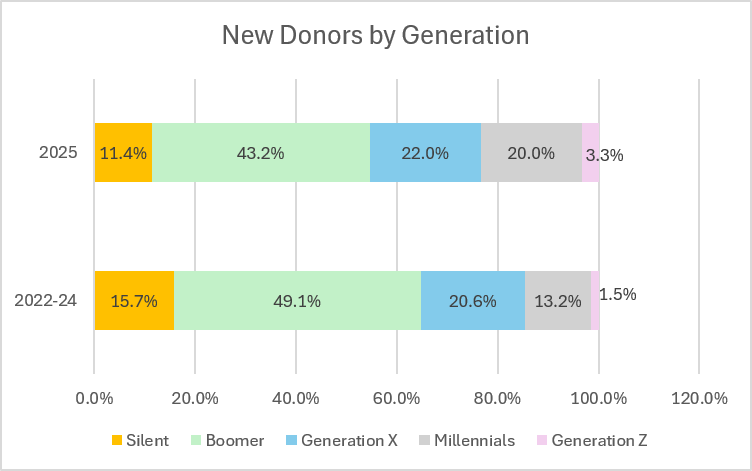
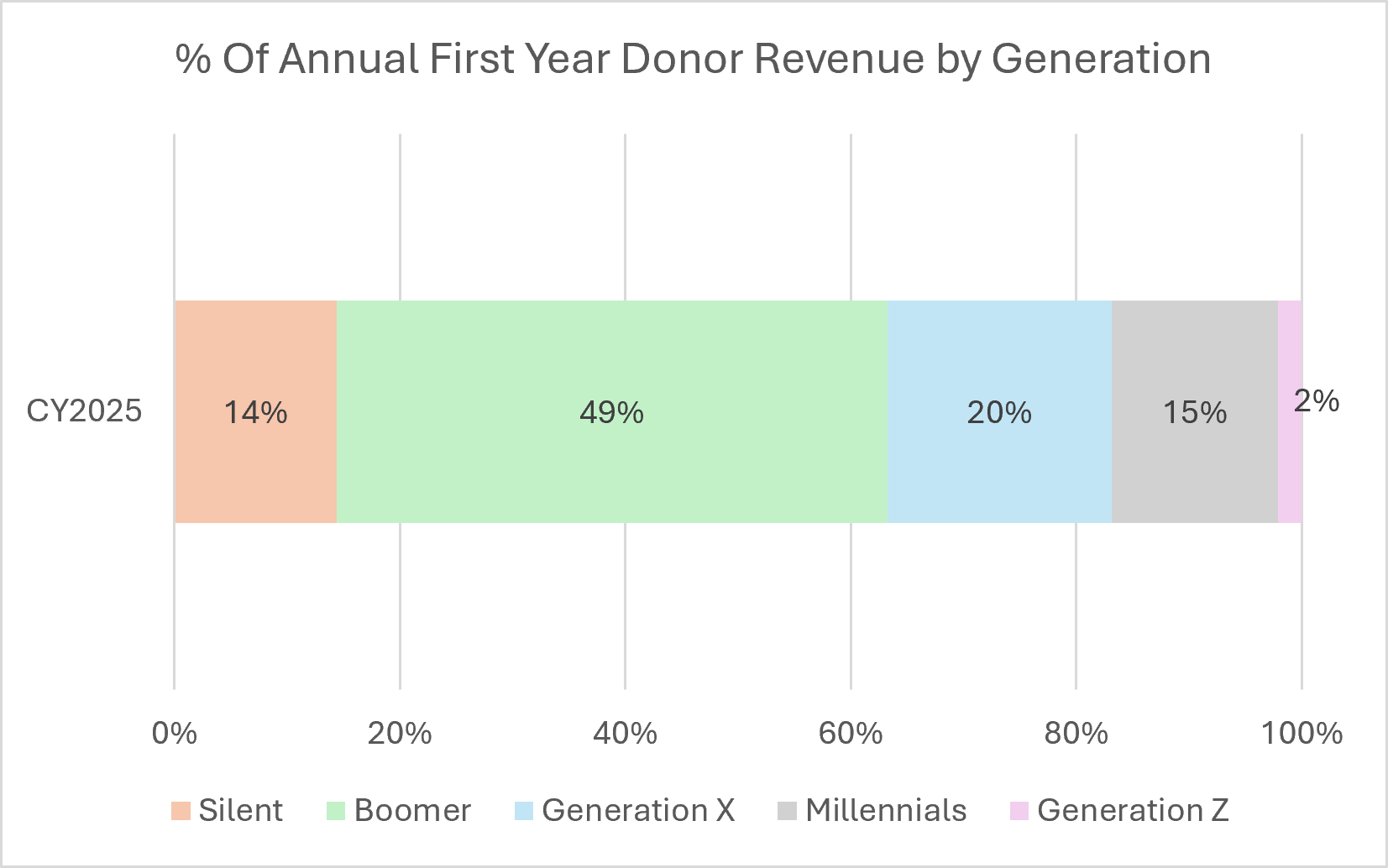
Boomers and Silents continue to make up the greatest share of new donors in 2025, though their slice of the pie declined from 65% in previous years to 55% in 2025. However, Silent and Boomer generation donors continue to give at levels that far outpace those of the younger generations, providing 63% of new donor revenue.
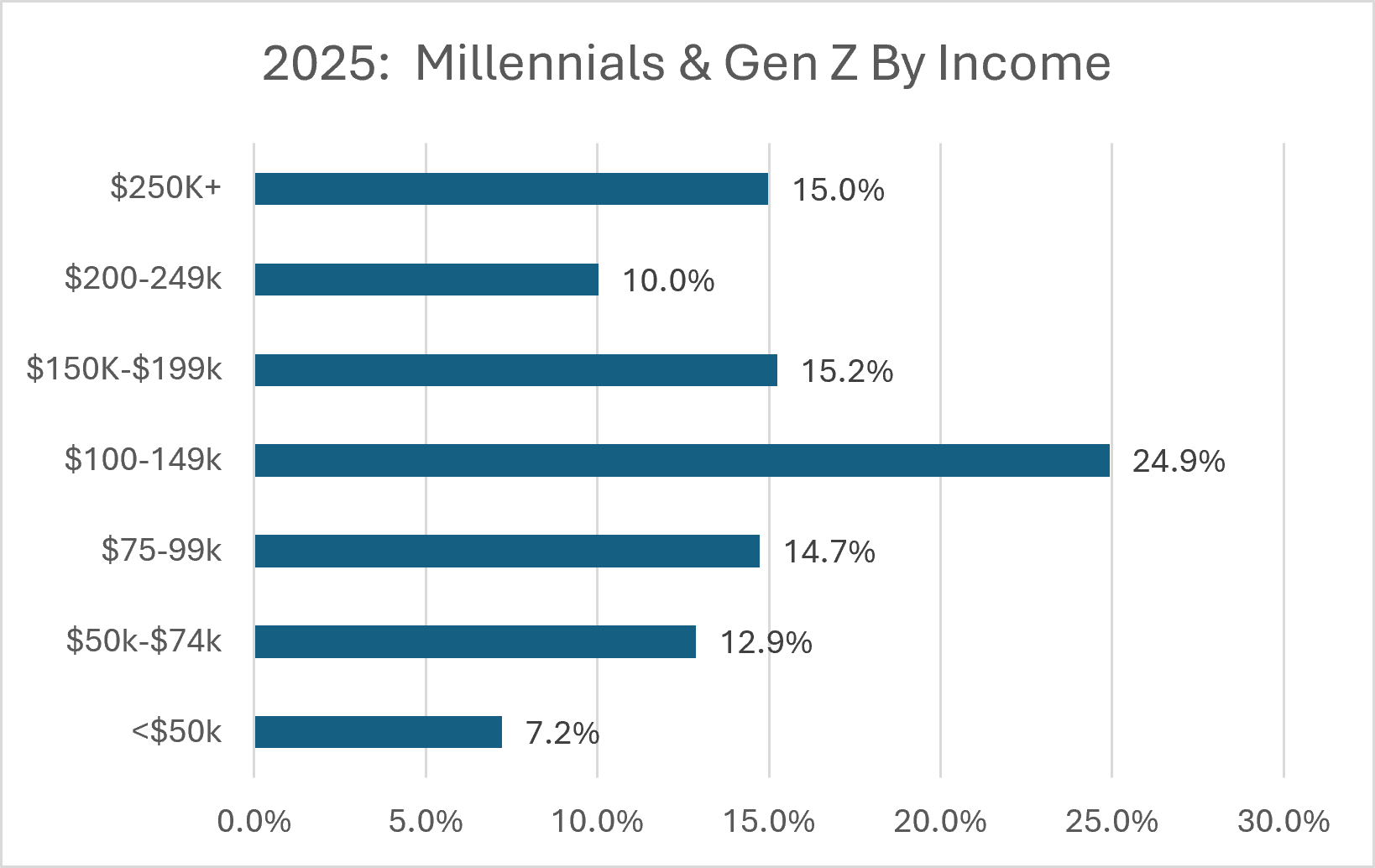
This, of course, is most likely related to income and life stages. Focusing on the youngest donors coming into the donor files, here is a breakout by income. Of note, is that over the course of 2025, the share of these younger donors that have incomes in the highest two brackets increased following our first study. Be sure to include these donors in wealth screening as appropriate.
But for most donors younger than 45, it is not surprising to see smaller average gift sizes for one-time and sustainer gifts. These generations have yet to reach their top earning potential and are likely in the thick of student loans, mortgages and childcare expenses, and the rising costs of everyday items will hit them the hardest.
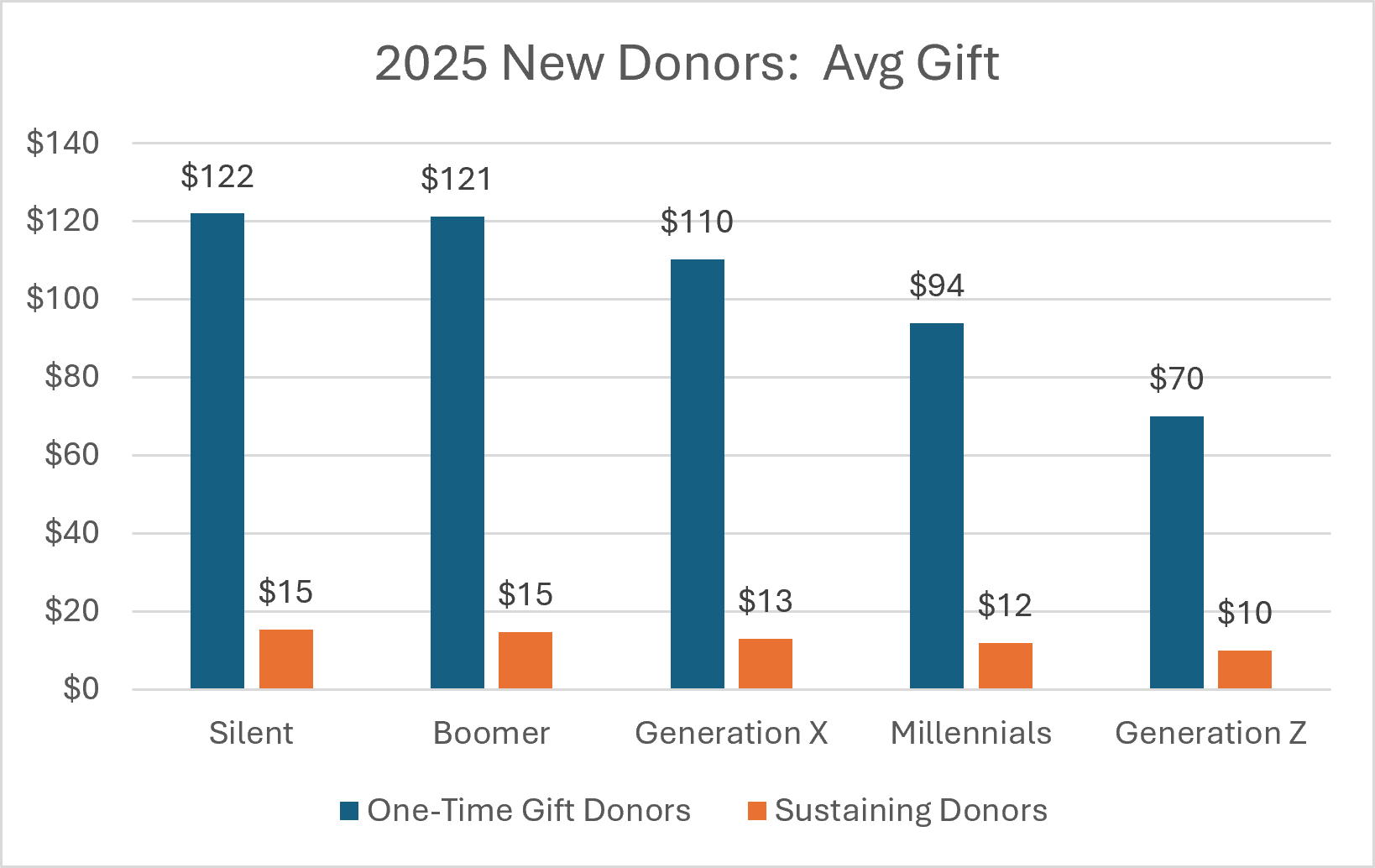
Another interesting change between the donors that gave in the first half of 2025 and the full years’ worth of new donors is the size of the average gifts. As the base swelled, the average gifts dropped particularly for the younger generations.
The Revolution May Be Televised, but the Reactionary Giving is Online
As we’d expect based on other crisis giving in the last decade, online giving saw the sharpest increase for public media in 2025. In fact, the share of new donors acquired online doubled from previous years.
For Gen X, Millennials and Gen Z – more than 85% of all new gifts in 2025 were made online. Here online giving includes gifts made during pledge events and on Passport/NPR+ forms. We wanted to show the full scope of giving that happens in our digital properties and encourage a robust audit of all your online donation forms, links, and components to be sure your potential donors are having the best online experience you can offer.
It also must be addressed that much of the online traffic was organic, driven by the spotlight on the plight of public media last year. What can we learn from this? What role do digital advertising and social media play in your fundraising strategy moving forward?
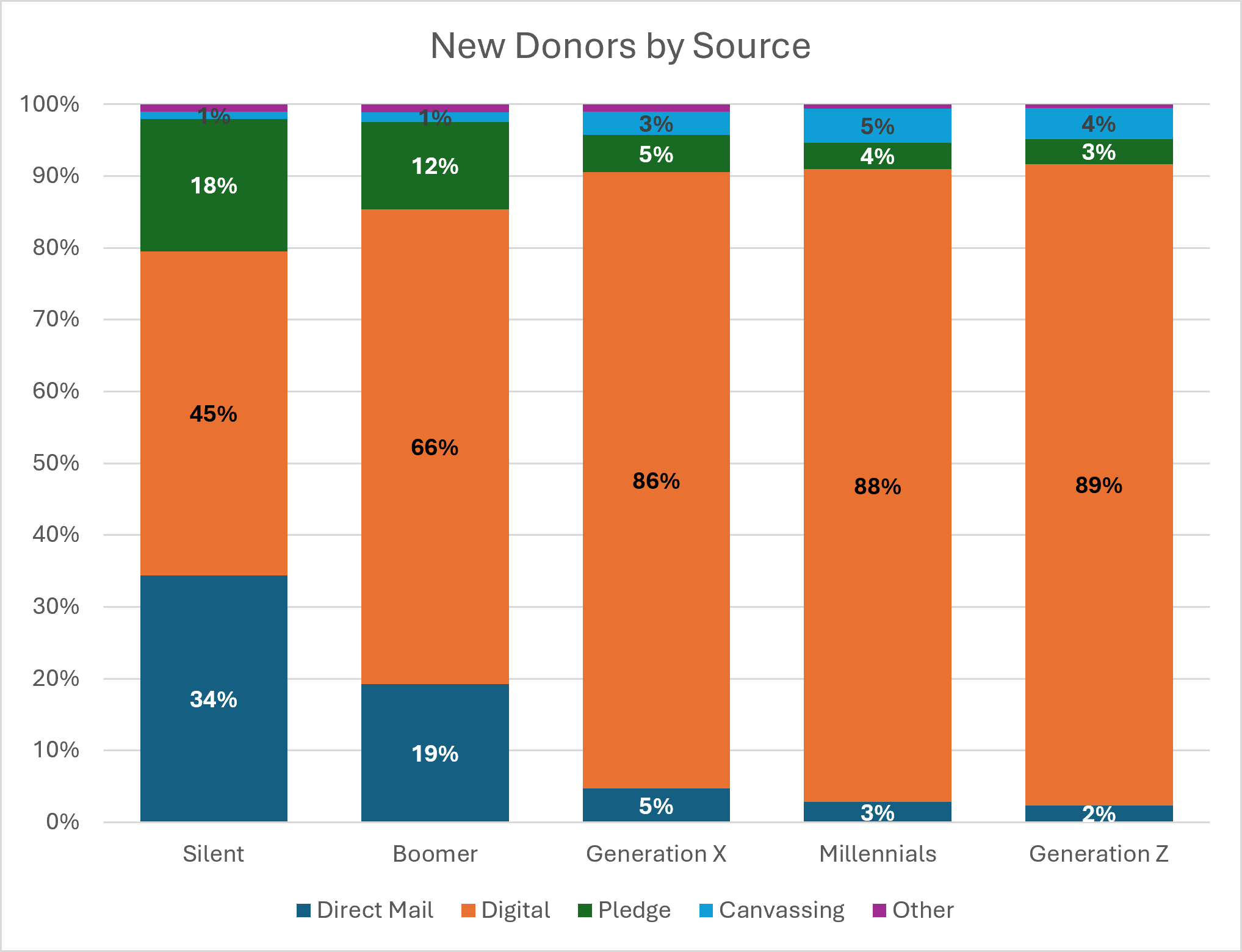
| First Gift Channel | Silent | Boomer | Generation X | Millennials | Generation Z |
|---|---|---|---|---|---|
| Direct Mail | 34% | 19% | 5% | 3% | 2% |
| Digital (All Web) | 45% | 66% | 86% | 88% | 89% |
| Pledge (Call In) | 18% | 12% | 5% | 4% | 3% |
| Canvassing | 1% | 1% | 3% | 5% | 4% |
| Other | 1% | 1% | 1% | 1% | 1% |
When we took a deeper dive into Passport viewing data for the TV and joint licensees in our study, there was a marked increase in activations and viewing among these younger cohorts, that persisted in the full year data. However, the gap between the rates of activation and actual streaming behavior is now even wider than before. Both data points perhaps stress the importance of Passport programming choices that factor in the interests and tastes of younger viewers.”.
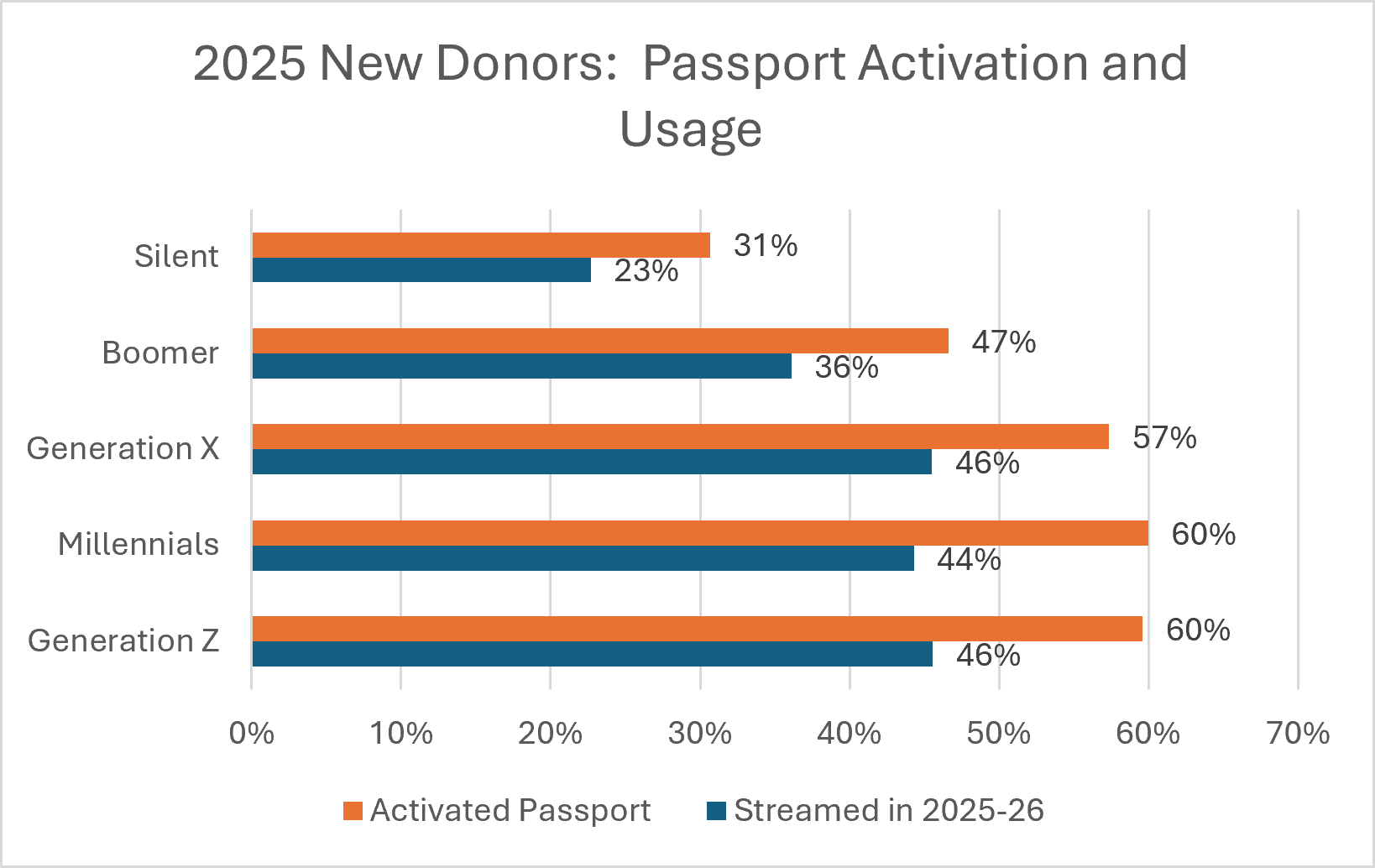
| Generation | Activated Passport | Streamed in 2025 | Difference |
|---|---|---|---|
| Silent | 31% | 23% | 8 points |
| Boomer | 47% | 36% | 11 points |
| Generation X | 57% | 46% | 11 points |
| Millennials | 60% | 44% | 16 points |
| Generation Z | 60% | 46% | 14 points |
Monthly Giving Even More Popular with Younger Donors
Another key performance indicator that increased as the donor pool widened was the share of donors making sustainer gifts – donors younger than 61 are much more likely to make sustainer gifts, with over 60% of Millennials and Gen Z’s making sustainer gifts in 2025.
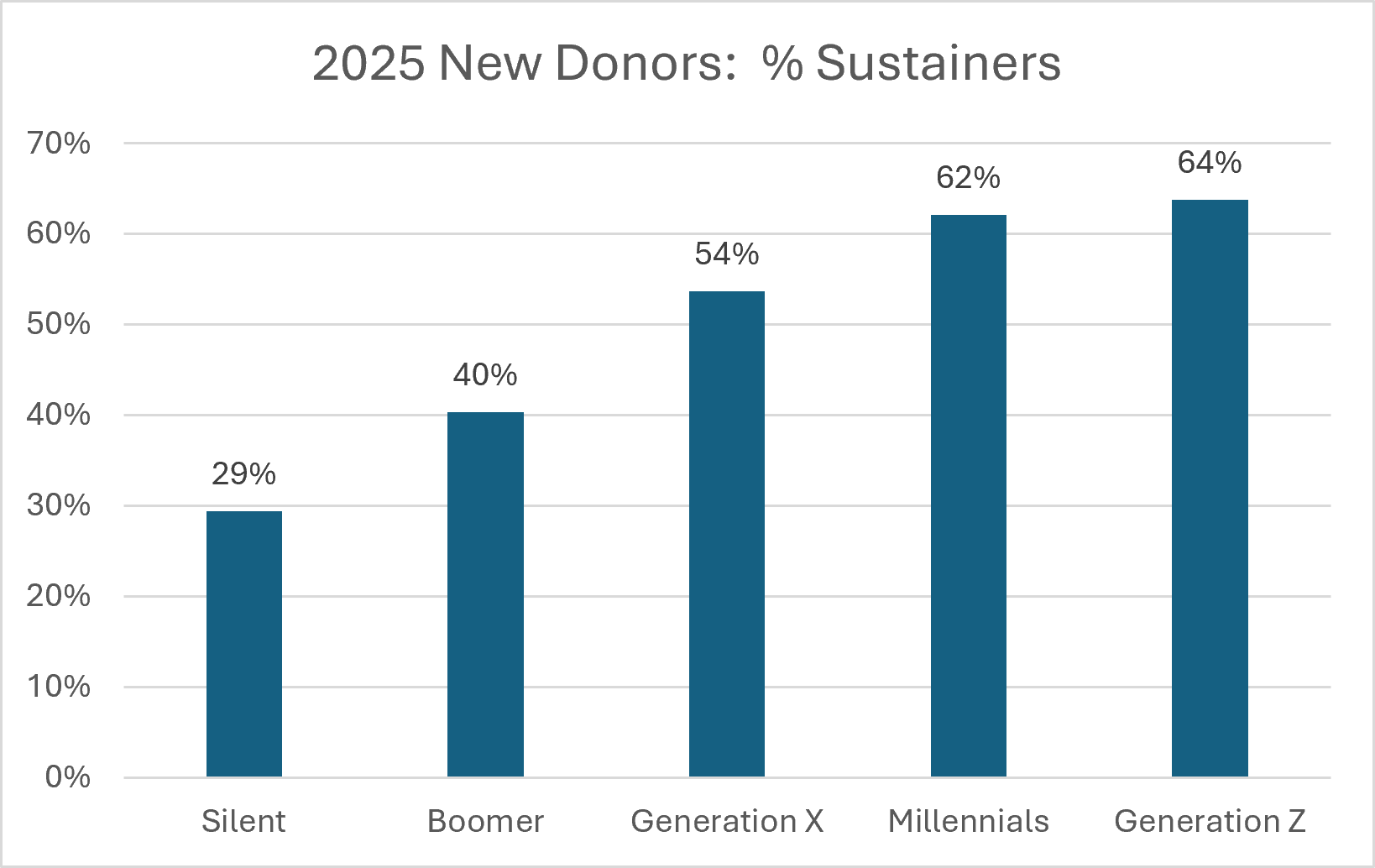
That means we should be able to retain these donors for years to come, especially if we focus now on engagement. Early analysis of donor churn indicates that most donors by generation are retaining at relatively stable rates and within a percentage point or two of each other. The outlier and more challenging generation has been the youngest cohort, Generation Z donors, though this group is relatively small compared to the larger donor pool.
There’s been much written about the new era for public media and likely more to be written in the years to follow. We hope this analysis provides a glimpse into what the future may look like as a new generation takes on the mantle of supporting noncommercial local journalism and content.
Methodology
Our new donor dataset for calendar year 2025 included 319K donors across 51 Public Media stations (22 TV, 20 Joint, 9 Radio) making their first donation in the 12 months of 2025. These accounts were matched to consumer demographic characteristics, including wealth and income characteristics, to gain insight into new donor behavior and profiles. Additionally, a dataset of nearly 1 million first year donors to 57 public media stations (24 TV, 22 joint and 11 radio) across 5 years of historical giving data (2020 – 2024) provided the basis for our historical analysis of first year donor demographic profiles and first year giving channel trends. These combined datasets represent the largest single source of new donor giving to Public Media and offer a diverse and discerning lens into this generous and evolving base of donors offering their financial support to this critical sector.